

How to Hire Remote Developers in 2025: A Founder's Guide





Ad Spot Availabe




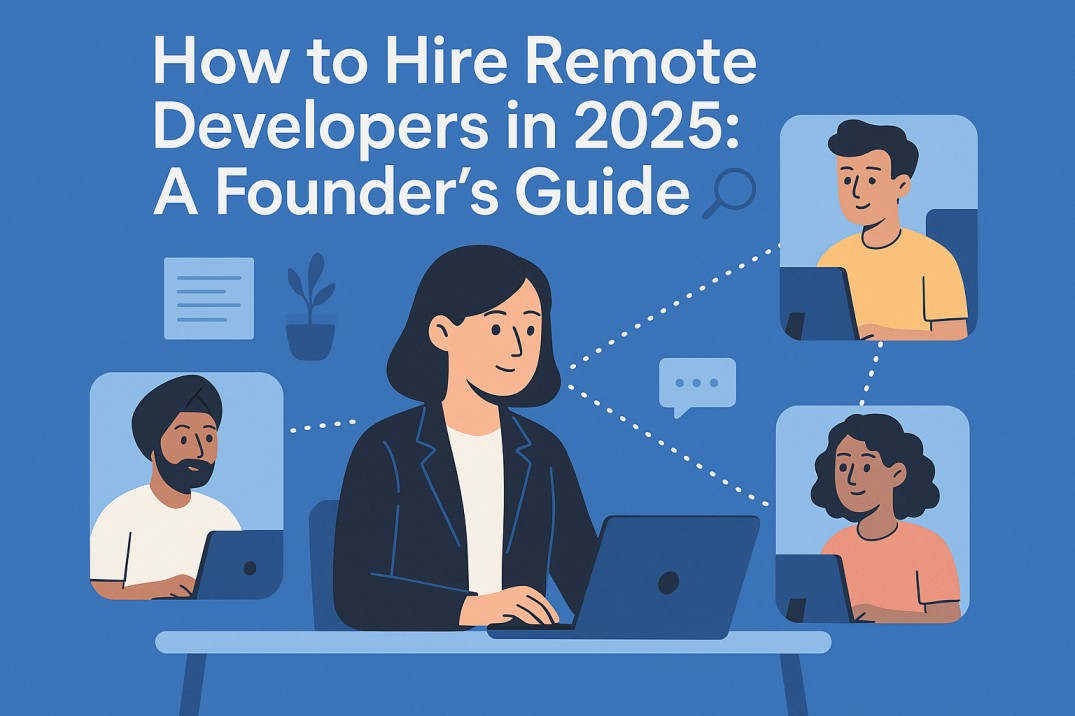
The challenge is not about finding #remote developers. The challenge is finding great ones fast and avoiding the mistakes that waste time and money.
Here's what you need to know to build a #remote development team that ships.
(h2)Why Remote Developer Hiring Is Different(/h2)
Hiring #remote developers is not the same as hiring local ones. You need different evaluation methods, different interview questions, and different onboarding processes.
Local hiring lets you meet face-to-face. You get a sense of someone's energy and how they interact with your team in real time. #Remote hiring removes these cues. You rely more on their portfolio, their communication skills in writing, and their ability to demonstrate self-direction.
The good news? #Remote hiring forces you to focus on what matters: results. You judge candidates on their code quality, their problem-solving ability, and their track record of delivering projects on time.
(h2)Where Most Founders Go Wrong(/h2)
Founders make three mistakes when hiring #remote developers:
(h3)Hiring for availability instead of skill.(/h3) When you need someone yesterday, you settle for whoever is available. This backfires. A mediocre developer slows down your entire team and creates technical debt that haunts you for months.
(h3)Skipping the trial period.(/h3) Resumes lie. Portfolios lie. Even interviews lie. The only way to know if someone is good is to see them work. Always do a paid trial project before committing to a full-time hire.
(h3)Ignoring time zone overlap.(/h3) Hiring a developer in a completely different time zone seems fine until you realize you need feedback on a feature and they are asleep. Aim for at least three to four hours of overlap where your team works at the same time.
(h2)What to Look for in Remote Developers(/h2)
Great #remote developers share three traits:
(b)They communicate clearly.(/b) #Remote work lives and dies on communication. Developers who explain their thinking in writing, document their code well, and ask clarifying questions before starting work are gold.
They own their work. You need developers who treat your product like it is theirs. They do not wait for someone to tell them what to do next. They see problems, propose solutions, and move forward.
(b)They have a portfolio that proves it.(/b) Talk is cheap. Look for developers with GitHub repos, live projects, or case studies that show their work. If they have contributed to open-source projects or built side projects, even better.
(h2)How to Find Remote Developers Fast(/h2)
Posting a job on a generic job board is slow and inefficient. You get hundreds of applications from unqualified candidates, and you waste days sorting through them.
Platforms like (link=https://jobserver.ai/)jobserver(/link) solve this. You get access to pre-vetted #remote developers who have already been screened for technical skills and communication ability. You skip the noise and go straight to interviewing qualified candidates.
The other option is referrals. Ask your network for recommendations. Developers who come through trusted referrals tend to work out better because someone has already vouched for their skills.
(h2)The Interview Process That Works(/h2)
Your interview process should answer three questions:
(i)Do they have the technical skills to do the job?(/i)
(i)Do they communicate well enough to work #remote?(/i)
(i)Will they take ownership of their work?(/i)
Here's how to structure your interviews:
(b)Round 1(/b): Technical screen (30 minutes). Give them a problem to solve live. Watch how they think through it. Do they ask good questions? Do they explain their reasoning? Do they write clean code?
(b)Round 2(/b): Portfolio review (30 minutes). Have them walk you through a past project. What was the problem? What did they build? What challenges did they face? How did they solve them? This reveals how they approach problems in the real world.
(b)Round 3(/b): Paid trial project (one week). Give them a small, real project from your backlog. Pay them fairly for their time. This shows you how they work under actual conditions: how they communicate, how they handle feedback, and what quality of work they deliver.
(h2)Red Flags to Watch For(/h2)
Some red flags should make you walk away immediately:
(b)They do not have a portfolio or GitHub profile.(/b)
(b)They dodge technical questions or give vague answers.(/b)
(b)They blame past employers or clients for project failures.(/b)
(b)They resist doing a paid trial project.(/b)
(b)They are not available during your core working hours.(/b)
Trust your gut. If something feels off, it probably is.
(h2)Onboarding Remote Developers(/h2)
Onboarding makes or breaks your relationship with a #remote developer. Get it wrong, and they quit in the first month. Get it right, and they become productive fast.
Your onboarding checklist should include:
(h3)Access to everything on day one.(/h3) Give them access to your codebase, project management tools, design files, and communication channels before they start. Nothing frustrates developers more than spending their first week waiting for access.
(h3)Clear documentation.(/h3) Document your architecture, coding standards, deployment process, and team workflows. If it is not written down, your new developer will waste time guessing or asking questions.
A small win in the first week. Assign them a small feature or bug fix they finish in their first week. This builds confidence and gets them familiar with your codebase without overwhelming them.
Regular check-ins. Schedule daily check-ins for the first two weeks, then move to weekly. Ask what they are working on, what is blocking them, and how you help them succeed.
(h2)How #AI Is Changing Remote Developer Hiring(/h2)
#AI tools are making #remote developer hiring faster and more accurate. Resume screening, skill assessments, and even initial interviews get handled by #AI, saving founders hours of time.
Platforms using #AI to match startups with developers analyze technical skills, communication ability, and cultural fit. This means you spend less time sorting through bad candidates and more time interviewing great ones.
#AI also helps during onboarding. Chatbots answer common questions, freeing up senior developers to focus on high-value work instead of walking new hires through basic setup tasks.
The bottom line: #AI is not replacing #remote developers. It is making it easier to find and hire them.
(h2)Managing Remote Developers for Results(/h2)
Hiring great #remote developers is only half the battle. You still need to manage them well.
Here are three principles that work:
Judge output, not hours. Do not track when developers are online. Track what they ship. Set clear goals for each sprint and hold people accountable for results.
Communicate asynchronously. Use tools like Slack, Notion, and Loom to communicate without needing everyone online at the same time. Record video updates, write detailed briefs, and document decisions.
Build trust through transparency. Share your roadmap, your metrics, and your challenges. When your team knows where the company is headed and why their work matters, they stay motivated and engaged.
(h2)The Cost of Hiring Remote Developers(/h2)
#Remote developers cost less than local ones in expensive cities like San Francisco or New York. Senior developers in Eastern Europe, Latin America, or Southeast Asia charge 30 to 50 percent less than their US counterparts while delivering the same quality.
This does not mean you hire the cheapest option. Cheap developers are expensive in the long run because they produce buggy code, miss deadlines, and create technical debt.
Pay fair market rates for the developer's location. If you are hiring from Poland, pay Polish market rates. If you are hiring from Argentina, pay Argentine market rates. This attracts top talent without overpaying.
(h2)Start Hiring Remote Developers the Right Way(/h2)
The startups winning in 2025 are not the ones hiring locally. They are the ones building #remote teams with top talent from around the world.
If you are serious about hiring #remote developers, start with these steps:
Define the role clearly. What skills do they need? What will they work on in the first 90 days?
Use platforms like jobserver.ai to find pre-vetted candidates fast.
Interview for technical skills, communication, and ownership.
Run a paid trial project before hiring full-time.
Onboard thoroughly with documentation and regular check-ins.
The best #remote developers are not waiting for your job post. They are working for someone else or getting hired through platforms that connect them with smart founders. The question is: will you be one of those founders?
(i)Find your next #remote developer on jobserver.ai and start building the team you need to win.(/i)



Category:
Other
Region:
South America
Author:
foradserver@gmail.com
Ad link: